Ideafy
The kanban that writes code. Drop an idea. AI evaluates feasibility, writes the implementation, generates tests, and hands you a card ready to ship.
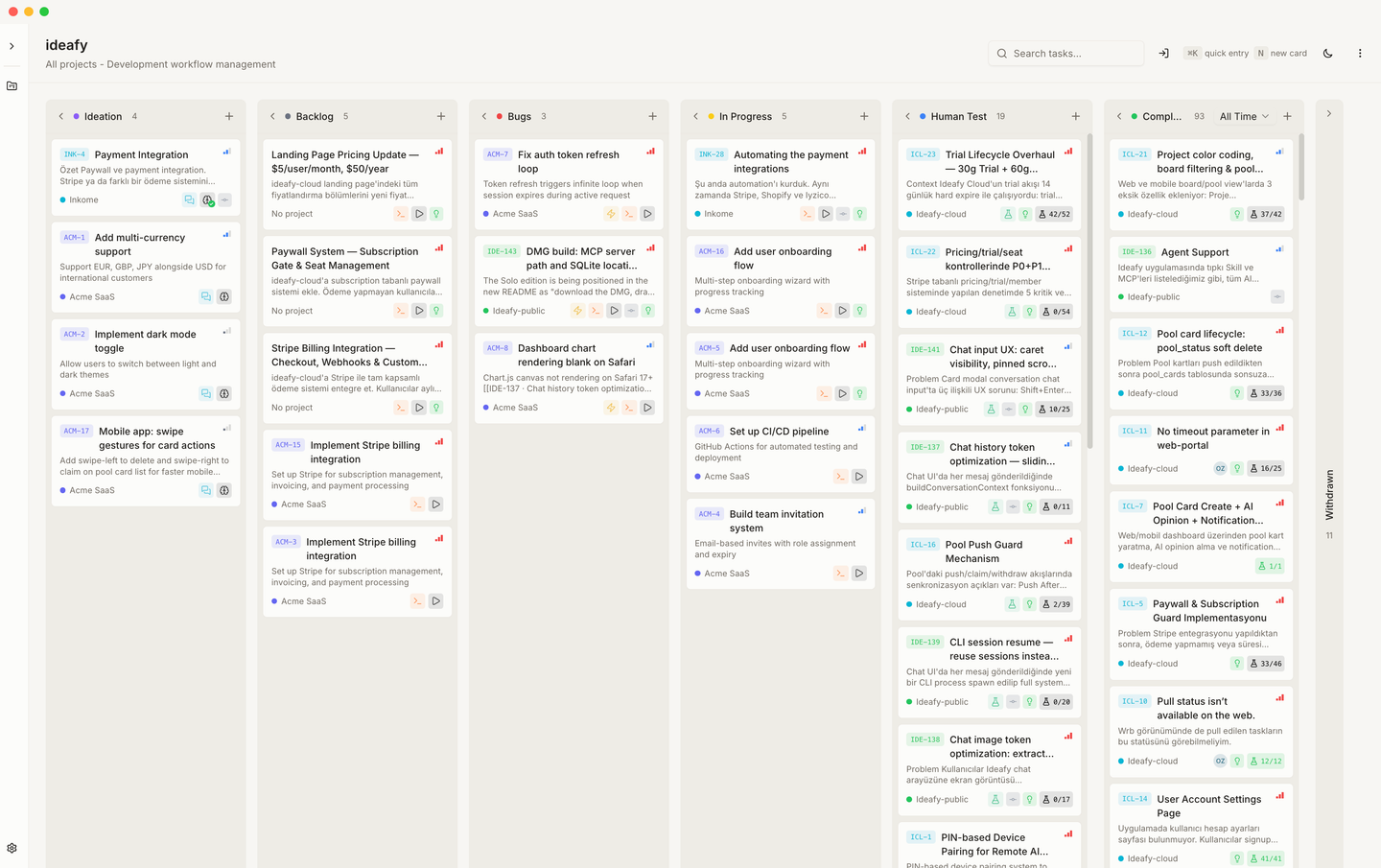
What is Ideafy?
Ideafy is a local-first kanban app built for solo founders and small teams who work with AI coding agents. The board is the same six-column flow you already know — Ideation, Backlog, Bugs, In Progress, Human Test, Completed — but every card is wired to Claude Code, Gemini CLI, or Codex through the Model Context Protocol. Cards aren't just tickets; they're executable units with enough context for an agent to act on them without asking you.
Sixty-second tour
- Capture. Quick entry takes an idea straight into a card with title, description, priority, and complexity. Pure capture — no AI interruption.
- Evaluate. Run
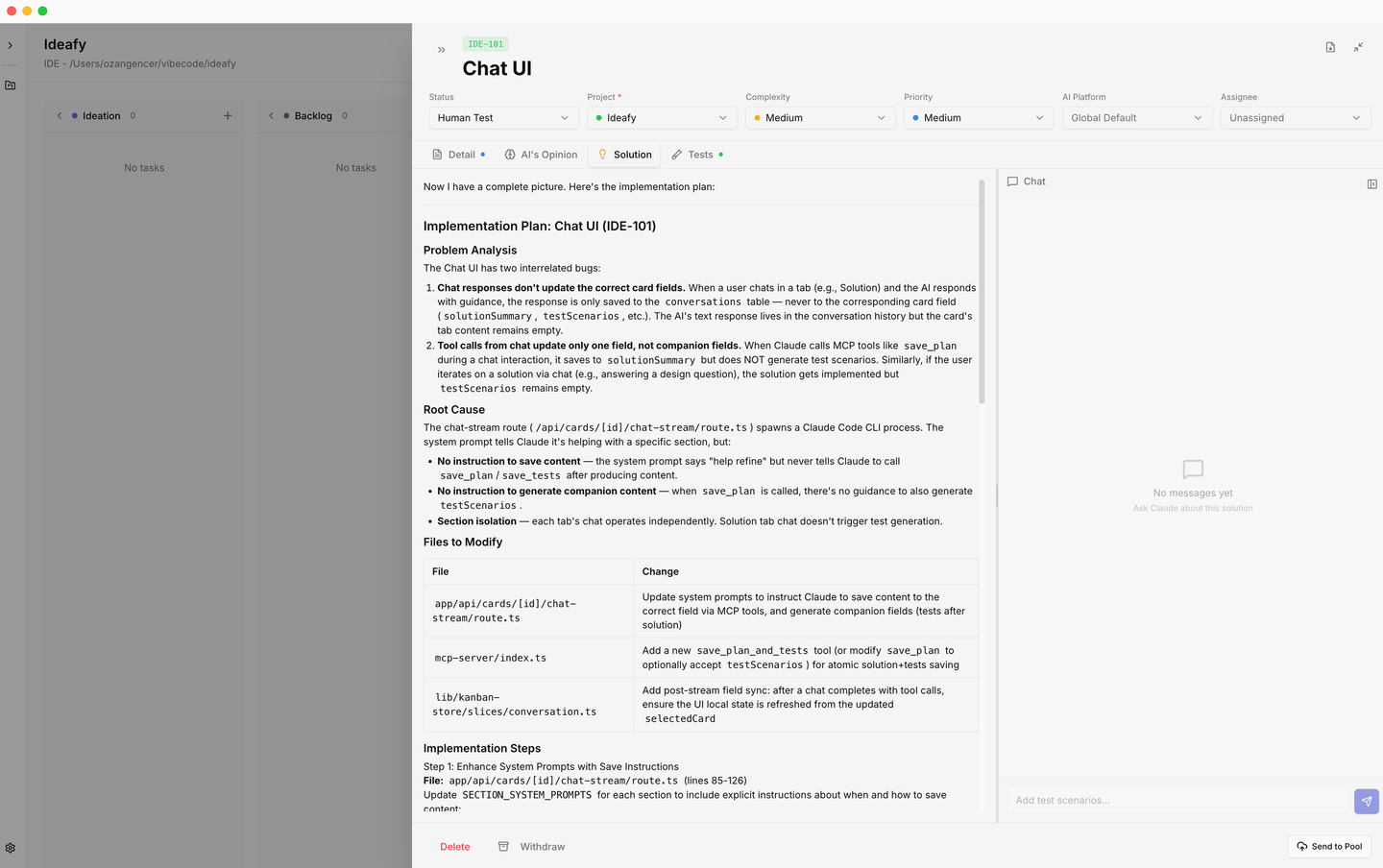
evaluateon an Ideation card. The agent reads your Product Narrative and produces an opinion: strengths, concerns, recommendations, a verdict. You decide if it's worth doing. - Plan. Chat with the agent in the card's Solution tab — or Open in Terminal to drop into Claude's plan mode. Type
@for docs,[[for cross-referenced cards,/for skills and MCP tools; the agent pulls each into context. When it callssave_plan, the card moves to In Progress and an isolated git worktree is created for the work. - Build. Run
autonomousor open an interactive terminal. The agent implements the plan inside the worktree with its own dev server on its own port. You keep working on main. - Test. The agent calls
save_testswhen it's done, moves the card to Human Test, and hands you a checkbox list of acceptance criteria. Tick them off by hand — and if something's wrong, ask the chat panel to fix, commit, and push without ever opening an IDE. This tab is not developer-only: product owners, business analysts, and founders can drive it end-to-end with--dangerously-skip-permissionsenabled on the session. - Ship. Merge the branch from the card modal. Ideafy rebases onto main, surfaces any conflicts with a file list (or asks Claude to resolve them), and cleans up the worktree.
Who it's for
- Solo founders who want a single pane of glass for "what should I build, what am I building, what's done" — with AI as the second pilot, not a separate tab.
- Small teams (3–5 people) who want to share work through a pool without the ceremony of Jira.
- People already using Claude Code who are tired of losing context between sessions and want a board that survives sleep.
Two editions
| Edition | Distribution | Who it's for |
|---|---|---|
| Public | Free, open-source DMG on GitHub | Solo founders |
| Team | Paid DMG with team features | Small teams (3–5 people) sharing work through a pool |
See Editions overview for the full comparison.
Where to go next
- New to Ideafy? → Install and Your first project
- Want to understand the stack behind it? → AI Manifesto
- Want to understand the "why"? → Philosophy
- Setting up a team? → Team overview
- Just want to read the tools? → MCP tools reference
Up: User guide index